Knee Osteoarthritis (Gonarthrosis): Stages and Treatment Options

If you feel pain in your knees when climbing or descending stairs, stiffness in the morning, or swelling after long walks, knee osteoarthritis may be the cause. Known medically as gonarthrosis, this condition develops as the cartilage covering the knee joint gradually thins and wears away. Gonarthrosis is quite common, particularly after the age of 50, and when it is managed correctly in its early stages, quality of life can be preserved to a great extent. In this article, I have summarized the stages of knee osteoarthritis, the role of weight control and exercise in treatment, medication and injection therapies, regenerative options, and when knee replacement comes into consideration.
Why Does Gonarthrosis Develop?
The knee is one of the largest weight-bearing joints in the body. The cartilage covering the joint surfaces loses its water content and elasticity with age. When genetic predisposition, excess weight, previous meniscus or ligament injuries, fractures involving the joint, and leg alignment problems (such as bowlegs) are added to the picture, the wear process can accelerate. Gonarthrosis is more common in women and in people whose occupations place heavy demands on the knees.
The Stages of Knee Osteoarthritis
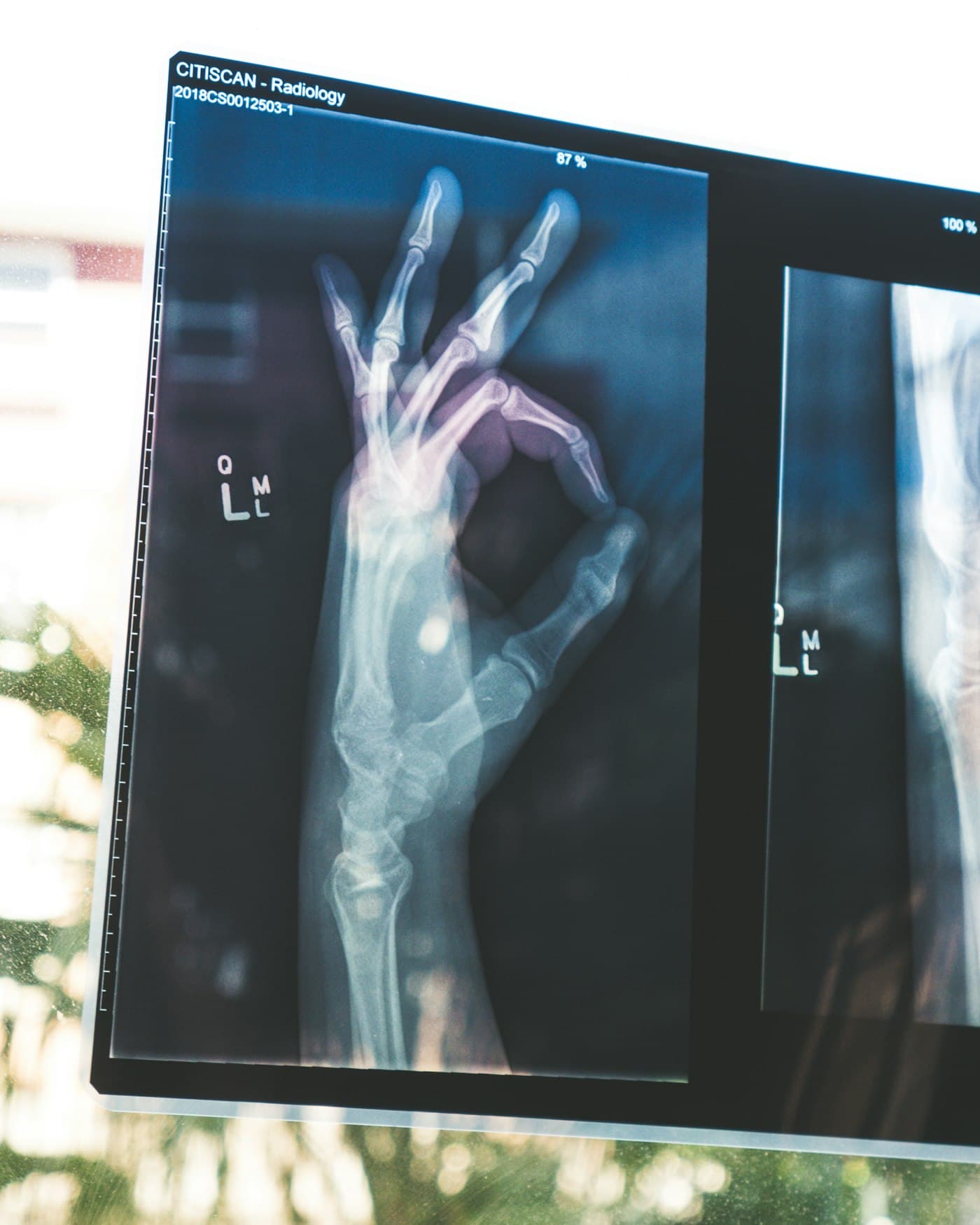
When evaluating gonarthrosis, we rely on X-ray images together with the findings of the physical examination. According to the Kellgren-Lawrence classification, the most widely used system, knee osteoarthritis is divided into four stages:
- Stage 1 (Doubtful): The joint space is preserved; small bone spurs (osteophytes) may just be starting to form. Pain is usually mild or absent.
- Stage 2 (Mild): Osteophytes are clearly visible, and mild narrowing of the joint space begins. Pain after long walks and climbing stairs is typical.
- Stage 3 (Moderate): The joint space is noticeably narrowed. Pain is felt during everyday activities, accompanied by stiffness and occasional swelling.
- Stage 4 (Severe): The joint space has largely closed, and the bone surfaces rub against each other. Pain may persist at rest and even at night.
Staging serves as the road map for the treatment plan. In the early stages, protective approaches take priority, while in advanced stages surgical options come up more often. But remember: treatment is determined not by the X-ray image alone, but by your symptoms and your quality of life.
The Role of Weight Control and Exercise
Regardless of the stage, the cornerstone of knee osteoarthritis treatment is weight control and regular exercise. While walking, your knees carry roughly three to four times your body weight; every pound you lose therefore means a multiplied reduction in the load on your knees. Scientific studies show that weight loss can reduce knee pain and help slow the progression of the disease. When planning your exercise program, the following activities are usually emphasized:
- Exercises that strengthen the muscles around the knee, especially the front thigh muscles (quadriceps)
- Low-impact activities that spare the joint, such as swimming and water-based exercises
- Stationary cycling and brisk walking on level ground
- Flexibility and balance training
“The strongest natural support protecting your knee is the strong muscles that surround it — which is why exercise is one of the most important parts of treatment.”
Medication and Intra-Articular Injections
Pain relievers and anti-inflammatory medications used under a physician's supervision during painful periods can be effective in easing symptoms. However, these medications do not change the course of the disease, and long-term, uncontrolled use may pose risks to the stomach, kidneys, and cardiovascular system. For this reason, medication should always be planned under medical supervision.
Intra-Articular Injections
When oral medications are not enough, intra-articular (into-the-joint) injections may come into play:
- Hyaluronic acid (joint fluid supplementation): Aims to improve joint lubrication; in suitable patients, especially in the early and moderate stages, it can reduce pain for periods of several months. Its effect can vary from person to person.
- Cortisone injection: Can provide rapid relief during flares of severe pain and swelling; however, because frequent repetition may damage the cartilage, it is recommended only a limited number of times per year.
Regenerative Treatment Options
In recent years, regenerative methods such as PRP (platelet-rich plasma) and stem cell-based applications have been receiving growing attention. In PRP therapy, plasma rich in growth factors, obtained from your own blood, is injected into the joint. In appropriately selected patients, these methods can reduce pain and improve knee function; however, there is not yet definitive scientific evidence that they regenerate worn cartilage. We therefore consider regenerative treatments — particularly in early- and moderate-stage gonarthrosis — as a supplement to core approaches such as weight control and exercise. Which patients may benefit from these treatments is something we decide together after a detailed examination and imaging.
When Does Knee Replacement Come Into Consideration?
Knee replacement is a surgery in which the worn joint surfaces are resurfaced with special implants, and it can deliver highly satisfying results in advanced-stage gonarthrosis. We do not consider it a first option, but rather a step to take when other methods fall short. It typically comes into consideration in the following situations:
- Pain that persists despite medication, injections, and exercise, and significantly limits daily life
- Pain that wakes you from sleep at night and continues even at rest
- A marked reduction in walking distance and serious difficulty using stairs
- Advanced joint-space narrowing on X-ray (Stage 3-4) and deformity of the knee
With regular follow-up and proper use, a significant proportion of the modern knee replacements performed today can remain functional for 15-20 years or more, although this period varies from person to person. Most patients are walked with support within the first days after surgery and generally return to daily life to a large extent within a few months. In suitable patients whose wear is limited to only one compartment of the knee, a partial (unicompartmental) replacement may also be an option; this decision is made on an individual basis.
Knee osteoarthritis is a process in which your quality of life can be preserved for many years when it is recognized early and managed correctly. If your knee pain has lasted longer than a few weeks, if stairs are becoming increasingly difficult, or if you notice swelling and stiffness in your knee, I recommend seeing an orthopedics and traumatology specialist without delay. Together, we can evaluate your symptoms and create the treatment plan best suited to your stage, age, and lifestyle.
Frequently Asked Questions
Can knee osteoarthritis be cured completely?
Is walking harmful if you have knee osteoarthritis?
Does PRP or stem cell therapy eliminate the need for knee replacement?
When can I walk after knee replacement surgery?
This article is for informational purposes only; it does not replace diagnosis or treatment. Please consult a physician about your complaints.
Do you have similar complaints?
Message us on WhatsApp and let's schedule your examination.